
If your eyes burn, feel sandy, or blur late in the day—especially after air conditioning, boat days, or long screen sessions—you are not imagining it. Dry eye is one of the most common reasons patients visit Dry Eye Fort Lauderdale in Fort Lauderdale. Outdoor humidity does not automatically protect you indoors, and South Florida’s mix of sun, wind, AC, and digital work creates a uniquely frustrating pattern of symptoms.
This guide explains what we see in clinic at our Galleria Mall / LensCrafters location (2312 E. Sunrise Blvd, Space B1, Fort Lauderdale, FL 33304), how we evaluate dry eye, and what treatment options look like in real life—not just on a product label. For broader practice services, see the main Dry Eye Fort Lauderdale page or medical eye care on our Dry Eye Fort Lauderdale page.
Why dry eye is so common in Fort Lauderdale
Patients often say, “But it’s humid here—how can my eyes be dry?” The tear film is more than water. It needs a stable oil layer, enough aqueous tears, and a healthy eyelid surface. Common local triggers we discuss every week include:
- Indoor air conditioning that strips moisture during work hours and overnight sleep
- UV, glare, and wind from beach, boating, and convertible or patio time
- Screen focus that reduces blink rate and leaves the tear film unstable by afternoon
- Contact lens wear that can amplify dryness when the tear film is already stressed
- Medications, hormones, and eyelid inflammation that change tear quality over time
Authoritative overviews from the National Eye Institute and the American Academy of Ophthalmology describe the same core mechanisms we evaluate in exam: aqueous deficiency, evaporative dry eye (often related to meibomian glands), or a mix of both.
Symptoms that bring patients in
Dry eye rarely presents as one neat complaint. In Fort Lauderdale, we commonly hear:
- Burning, stinging, or a gritty “sand in the eye” feeling
- Vision that clears after a blink, then blurs again while reading or driving
- Watery eyes (reflex tearing can follow an unstable tear film)
- Light sensitivity, redness, or contact lens intolerance by midday
- Discomfort that worsens in AC, airplanes, or after hours of computer use
If symptoms appear suddenly with pain, significant vision loss, trauma, or chemical exposure, that is urgent care territory—contact the office or seek emergency care. For same-day medical concerns, start with our eye doctor guidance and call (954) 563-3450.
How Dr. Radzwill evaluates dry eye
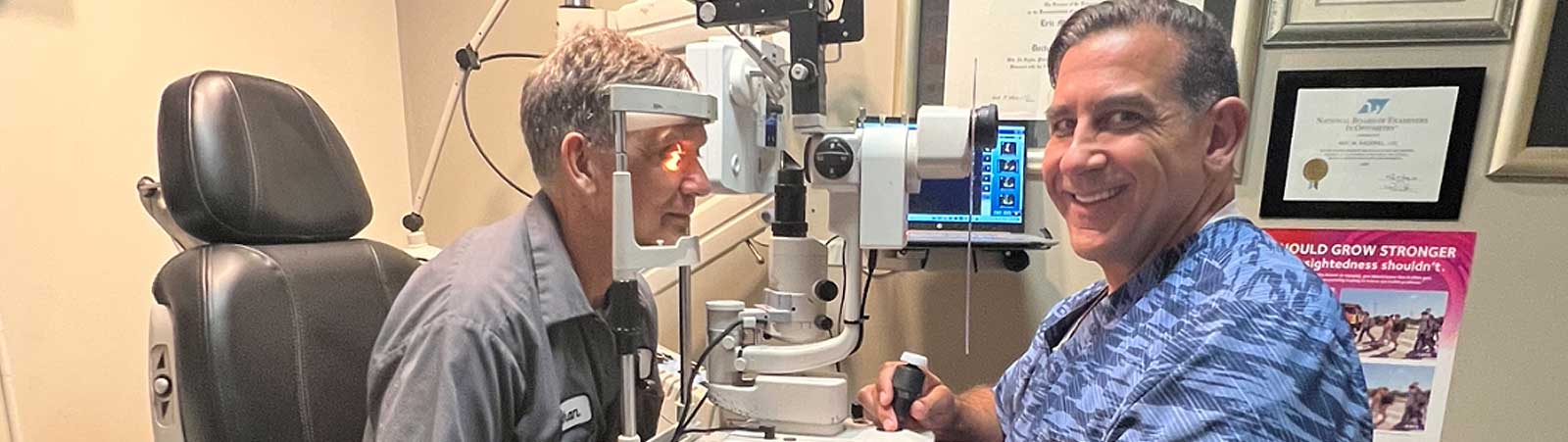
A helpful dry eye visit is not “try these drops and hope.” At Radzwill Optometric Associates, evaluation typically includes history (environment, screens, contacts, medications), slit-lamp assessment of the lids and ocular surface, and a look at tear quality and stability. The goal is to identify drivers—not only to name the symptom.
That matters because two patients can both say “my eyes feel dry” and need different plans. Someone with evaporative dry eye from eyelid oil gland dysfunction will not get lasting relief from random artificial tears alone. Someone whose main issue is incomplete blinking at a dual-monitor desk may improve with habit changes plus targeted therapy. Experience across two decades in this community helps us spot patterns quickly, including patients who have already cycled through multiple over-the-counter drops without a clear diagnosis.
Treatment options we discuss
Treatment is matched to findings and lifestyle. Depending on your exam, options may include:
- Preservative-free lubricants used on a schedule—not only when eyes already hurt
- Lid hygiene and warm compress routines for meibomian gland support
- Prescription anti-inflammatory or tear-support medications when appropriate
- Environmental adjustments (AC vents, humidifier habits, outdoor UV protection)
- Contact lens material, modality, or wear-schedule changes when lenses worsen symptoms
- Nutritional and lifestyle factors that support the ocular surface
We explain what to expect in the first weeks versus longer-term maintenance. Dry eye is often manageable, but it is rarely a one-visit “cure.” Patients who stay consistent with the plan—and return for follow-up—usually do better than those who chase a new bottle every time symptoms flare.
Dry eye, contacts, and vision correction plans
Unstable tears can make a glasses prescription feel “off” and can sabotage contact lens comfort. Before advancing specialty lenses or refractive surgery conversations, we want the ocular surface as healthy and predictable as possible. If you are exploring LASIK or lens-based options, a dry eye assessment belongs in that discussion—see also our notes on laser vision consultation on this blog and co-management details on the main practice site.
Who we serve from the 33304 / Galleria area
Our office inside LensCrafters at the Galleria Mall is convenient for East Fort Lauderdale, Wilton Manors, Oakland Park, Lauderdale-by-the-Sea, and nearby zip codes including 33304. Weekend availability and online scheduling through LensCrafters help busy patients get evaluated without waiting for symptoms to become unbearable. Neighborhood convenience is covered in more detail on our optometrist near me 33304 page.
FAQ: dry eye questions we hear most
Is watery vision still dry eye?
Yes, it can be. An unstable tear film often triggers reflex tearing. Watery eyes alone do not rule out dryness.
Do I need special drops forever?
Some people need ongoing maintenance; others improve enough to simplify their routine after the surface stabilizes. The exam findings drive that answer—not a one-size protocol.
Can AC really cause this in a humid climate?
Yes. Indoor AC and fans are among the most common environmental factors we discuss with Fort Lauderdale patients.
Will dry eye keep me from wearing contacts?
Not always. Many patients continue lens wear after we improve the tear film and adjust lens type or wear time. Others do better with glasses for part of the week. We decide together after evaluation.
When should I book sooner rather than later?
Book promptly if contacts become painful, vision fluctuates enough to affect driving, redness persists, or over-the-counter drops stop helping. Early evaluation is easier than waiting until every workday ends in discomfort.
Schedule a dry eye evaluation
If you are ready for a structured look at your symptoms—not another guess at the drugstore aisle—call (954) 563-3450 or use the contact page to reach the practice. Bring a list of drops you have tried, your contact lens brand if you wear lenses, and notes about when symptoms are worst (AC, screens, mornings, outdoors). That history shortens the path to a plan that fits Fort Lauderdale life.
Dr. Eric Radzwill and the team at Radzwill Optometric Associates are here to help you see comfortably again—with clinical care grounded in local experience and clear next steps after your exam.